Differences and Application Scope of Front and Rear Light Sources for Industrial Endoscopes
Release time:2026-03-17 Click:5
In the field of industrial endoscope inspection, most inspection sites are internal cavities or hollows that lack light. This requires industrial endoscopes to be equipped with light sources, which are the core to ensuring inspection clarity and accuracy. The installation method (front-mounted or rear-mounted) determines the performance, application scenarios and cost of the industrial endoscope. As two mainstream configurations of industrial endoscopes, front-mounted light sources and rear-mounted fiber optic light sources are not merely different in position, but have essential differences in principle, structure and performance to adapt to different industrial inspection needs.
The function of the light source in an industrial endoscope is to provide sufficient and uniform illumination for the inspection area and eliminate dark corners. The core difference between the two lies in the installation position of the light source and the light transmission method, which in turn gives rise to a series of performance differences that directly affect the inspection effect of the industrial endoscope.
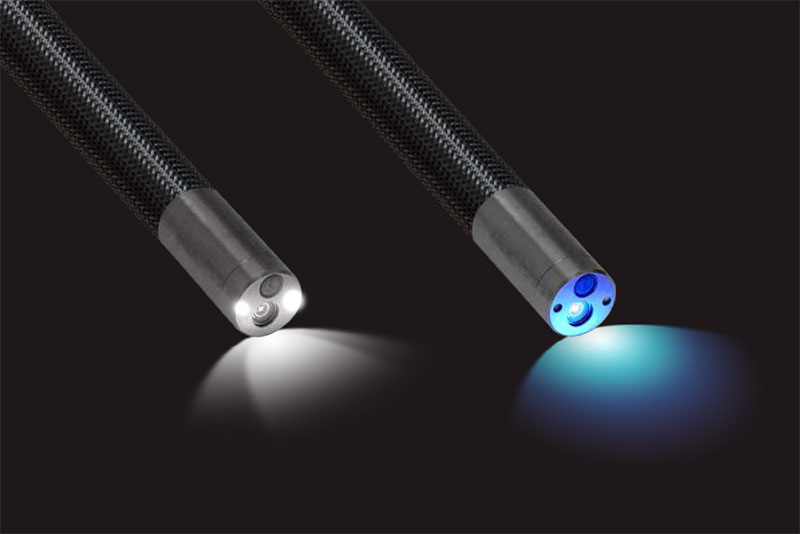
The front-mounted light source is currently the mainstream configuration for industrial endoscopes. Its core is to integrate micro LED beads directly at the front end of the probe, adjacent to the lens, without the need for additional light transmission components. When in operation, the LED beads emit light directly with no intermediate light loss, achieving "illumination immediately upon lighting". This type of industrial endoscope light source has a simple structure, consisting of LED beads, power supply lines and a host control module. Its brightness is adjustable, the probe can be made compact, and the assembly is mature with low mass production difficulty.
The light-emitting component (or high-power xenon lamp) of the rear-mounted light source can be an independent host, and the final light is transmitted to the front end of the probe through a fiber optic bundle running through the pipeline. It is characterized by "host light emission and fiber optic light transmission", where the probe end only serves as a light outlet without any light source electronic components. This type of industrial endoscope light source has a complex structure, including a host light source module, a fiber optic bundle, a light outlet and a protective structure. The fiber optic bundle is composed of hundreds to thousands of ultra-fine glass fibers bundled together, which transmits light through total internal reflection and requires supporting light-gathering and coupling structures to reduce loss.
The differences between the two run through dimensions such as structure, performance, cost and maintenance, directly determining the application scenarios of the industrial endoscope. The specific comparison is as follows:
Comparison Items | Front-mounted Light Source for Industrial Endoscopes (LED Front-mounted Type) | Rear-mounted Light Source for Industrial Endoscopes (Fiber Optic Light Guide Type) |
Brightness and Uniformity | Low light loss, high and uniform brightness, no light spots or dark corners | High brightness achievable; uniformity depends on fiber optic technology, and no light spots can be achieved with high-quality design |
Probe Diameter | No fiber optic required; ultra-fine probes of 2.4mm and 3.9mm can be made | Due to the fiber optic bundle and protective structure, the diameter is mostly 6mm or more, making it difficult to adapt to ultra-fine scenarios |
High Temperature Resistance | LED beads are easily damaged above 80~100℃, with general high temperature resistance | Only light exits from the probe end, with no light source electronic components, capable of withstanding temperatures above 200℃ |
Durability and Maintenance | Simple structure, resistant to bending, low maintenance cost and easy fault repair | Fiber optics are fragile and prone to breakage; the entire pipeline needs to be replaced after fiber breakage, resulting in high maintenance cost |
Cost Positioning | Low cost of core components, high assembly yield and outstanding cost performance | High cost of fiber optics and host light source, 50%~200% more expensive than front-mounted type, positioned as mid-to-high end |
Based on the differences in performance and cost, the selection of light sources for industrial endoscopes should focus on inspection temperature, probe diameter and budget. Industrial endoscopes with different configurations exert their respective advantages in the following scenarios.
With the advantages of "brightness, compactness, low cost and durability", front-mounted light sources for industrial endoscopes are suitable for most normal-temperature scenarios, including automotive manufacturing and maintenance (normal-temperature components such as engines and gearboxes), mold and injection molding industry (runner, cavity, etc.), aerospace (normal-temperature parts such as engine blades), general industrial equipment (pressure vessels, normal-temperature pipelines, etc.) and routine observation in scientific research laboratories. In these industrial endoscope inspection tasks, the front-mounted light source performs stably and reliably, and its limitation is that it cannot adapt to long-term high-temperature scenarios above 80~100℃.
The core advantage of the rear-mounted light source for industrial endoscopes is high temperature resistance, and it can output higher luminous flux, making it suitable for high-temperature and large-space inspection scenarios: automotive high-temperature components (three-way catalytic converters, exhaust pipes, etc.), electric power and thermal industry (boilers, high-temperature pipelines, etc.), chemical industry (high-temperature reaction kettles, etc.), as well as pipelines or vessels with large diameters that require strong light illumination. In these industrial endoscope inspection tasks, the rear-mounted light source is the only feasible choice, and its limitation is that it cannot adapt to ultra-fine probes smaller than 6mm, with high budget investment.
When selecting an industrial endoscope, the core is to "match the working conditions" without blindly pursuing high-end products. For routine normal-temperature inspections, priority should be given to industrial endoscopes with front-mounted light sources, which balance brightness, ultra-fine probe requirements and cost performance; for high-temperature scenarios with operating temperatures > 100℃, industrial endoscopes with rear-mounted fiber optic light sources can be selected. In summary, the front-mounted and rear-mounted light sources of industrial endoscopes are not substitutes for each other, and need to be accurately matched according to temperature, aperture and budget to ensure efficient and accurate industrial endoscope inspection.
Hot products

Industrial borescope 3D measurement function - X5 Series
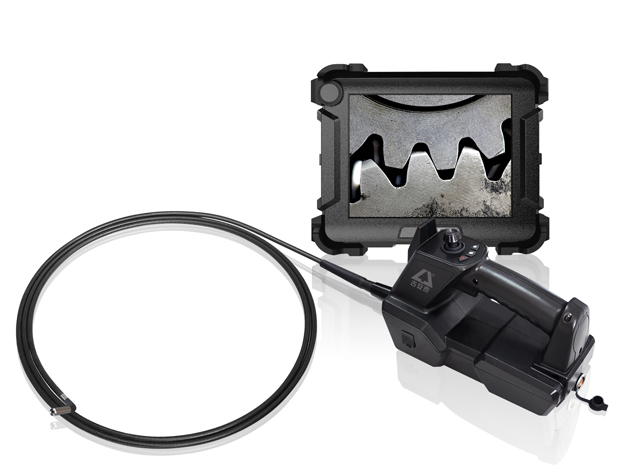
Engine borescope inspection camera Industrial Videoscope- C68 series
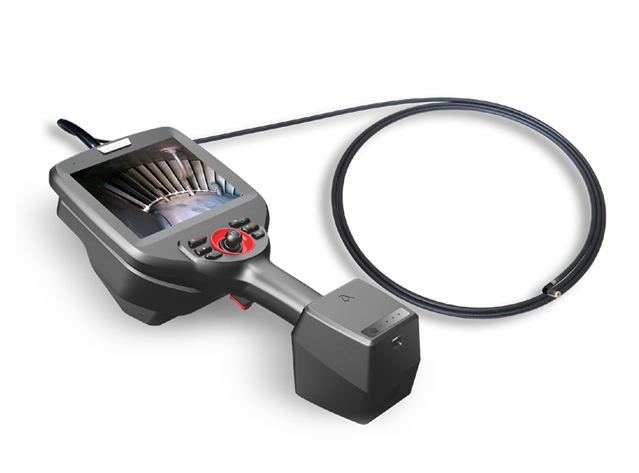
Coantec C65 series 3D Measurement High Definition Industrial Videoscope
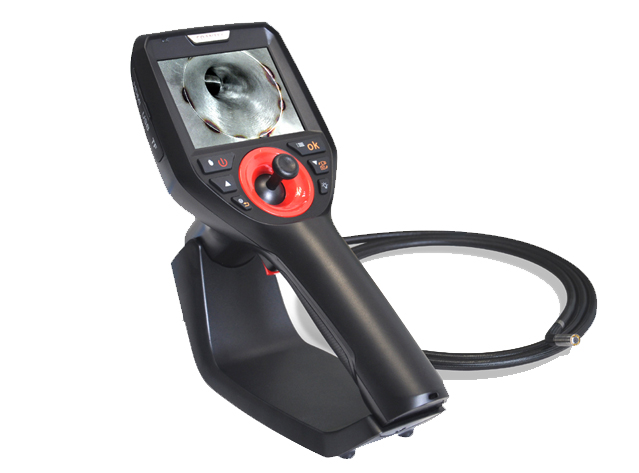
Super HD Mega Pixel Industrial Videoscope of Coantec C40 series
Tel:+86 13714520051
E-mail:flora@chinavideoscope.com

CONTACT US